



Table of Contents
ToggleA fireplace transforms a room instantly, the focal point, the ambiance, the coziness. But a real fireplace means venting, masonry, gas lines, or chimney maintenance. That’s where faux fireplaces come in. They deliver the visual warmth and mood without the structural headaches, permits, or five-figure installation costs. Whether you’re renting, lack suitable venting, or just want a quicker solution, faux fireplace ideas range from sleek electric inserts to DIY mantels and portable tabletop options. In 2026, faux fireplaces aren’t a consolation prize, they’re a smart, flexible choice that fits modern homes and budgets.
Key Takeaways
- Faux fireplace ideas offer a cost-effective alternative to real fireplaces, with electric inserts running $300–$2,000 installed versus $3,000–$5,000+ for traditional fireplaces, while eliminating permits, venting, and ongoing maintenance.
- Electric insert fireplaces use LED technology or video loops to create realistic flame effects with minimal power consumption (750–1,500 watts), operate silently, and require no combustion or carbon monoxide risk.
- Wall-mounted electric fireplaces are faster and less invasive to install than recessed units, requiring only stud mounting via brackets, while recessed designs demand more framing but deliver a premium built-in appearance.
- DIY fireplace surround projects using materials like shiplap ($1–$3 per linear foot), subway tile, or stone veneer paired with a floating mantel create a custom aesthetic that ties the unit into your home’s decor.
- Tabletop and portable faux fireplace solutions—including ethanol burners ($50–$300) and electric units ($30–$150)—provide zero-installation flexibility for renters and small spaces without any venting requirements.
- Shopping for electric fireplace units during summer clearance sales or checking floor models can reduce costs by 20–40 percent while ensuring the flame effect suits your space before committing.
Why Faux Fireplaces Are the Smart Choice for Homeowners
Real fireplaces demand venting, hearth clearances, combustible material setbacks, and ongoing chimney sweeps. They also require permits in most jurisdictions and inspections to meet code. Faux fireplaces sidestep those hurdles entirely.
The practical wins stack up fast. An electric fireplace insert costs $300–$2,000 installed, compared to $3,000–$5,000+ for a real fireplace or wood stove. Renters appreciate that many units are portable and plug-and-play. Homeowners in apartments or condos without venting options suddenly have a focal point and ambient light. There’s no ash cleanup, no draft concerns in summer, and no risk of chimney fires.
Beyond logistics, faux fireplaces are quiet. Unlike a crackling wood fire (which some love, but many find disruptive), an electric unit hums softly or operates silently if you disable the flame effect. Flame effects range from realistic, glowing embers, dancing logs, actual video, to abstract color-changing LED patterns. Some units offer heat output: others are purely decorative. That flexibility is the real draw: you pick the look, the function, and the footprint that fits your space.
Electric Insert Fireplaces: The Most Popular Option
Electric fireplaces dominate the faux fireplace market for good reason. They’re safe, no combustion, no carbon monoxide, and they’re energy-efficient. Most models run on 120V household current and use 750–1,500 watts when the heater is on. That’s less draw than a space heater, and the flame effect alone (no heat) uses minimal power.
Flame realism has improved dramatically. Modern units use LED technology or video loops to simulate glowing logs, embers settling, or flickering flames. Some even include ambient sound, crackling, wind, via Bluetooth. Color options range from traditional orange-yellow to blue, purple, and green moods.
Therm-L-Stor, Real Flame, and Napoleon are common brands you’ll find at big-box stores and online. Prices vary widely: basic wall-mounted units run $200–$400, mid-range inserts $400–$1,000, and high-end units with smart controls $1,500+. Don’t fixate on brand, focus on heater wattage (if you want warmth), flame quality, and whether it suits your wall or cabinet space.
Wall-Mounted vs. Recessed Designs
Wall-mounted fireplaces hang on the wall surface, mounted to studs via a heavy-duty bracket. Installation is straightforward: locate studs, mark fastener points at the correct height (typically 42–50 inches to the center), drill pilot holes, and bolt the unit to studs using lag screws or bolts. Patch drywall above and below as needed. Wiring goes to an outlet behind the unit or to a dedicated circuit if you’re hardwiring it (which requires a licensed electrician if your local code mandates it).
Recessed units sit inside the wall cavity, between two studs. They demand more framing: you’ll need to cut a rough opening, sister studs if the opening spans more than 24 inches, and add blocking for fastening. Trim goes around the bezel once installed. Recessed units look built-in and polished but require careful stud spacing, standard 16-inch on-center framing usually works, but you may need to reroute outlets or blocking. If you’re unsure about framing or how to tie into your home’s electrical system, call an electrician. Structural cuts demand precision: a mistake can weaken the wall.
Wall-mounted is faster and less invasive for most DIYers. Recessed looks premium and saves wall depth but requires more carpentry.
DIY Fireplace Surround and Mantel Projects
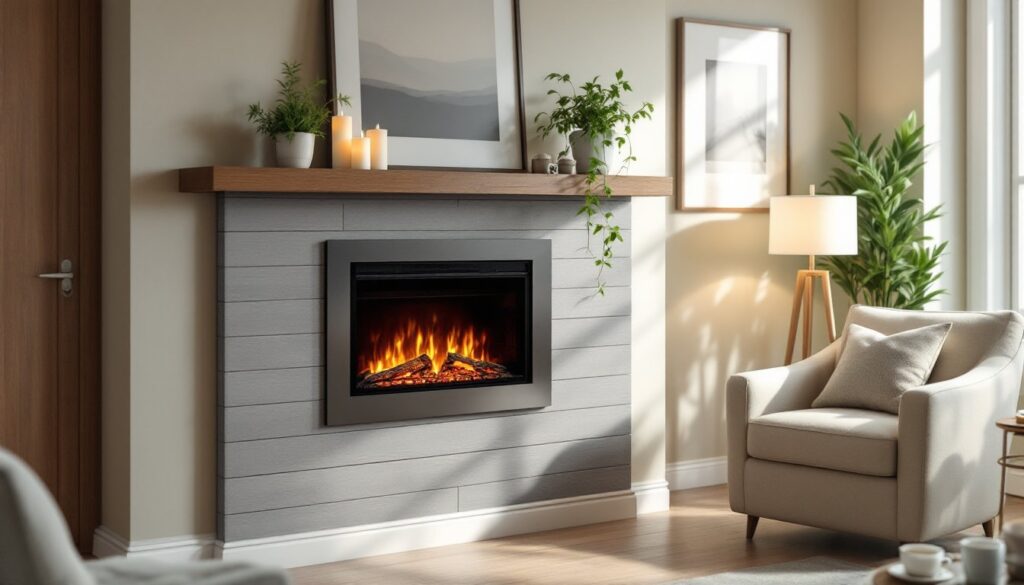
An electric insert is just the start. The surround, the wall frame around the unit, and the mantel above define the whole aesthetic. This is where you add character and tie it into your decor.
Materials and Design Inspiration
Common surround materials include brick veneer, shiplap, subway tile, stone veneer, and stacked slate. Brick veneer and stone veneer are realistic and durable but require adhesive, grout, and sealing. Shiplap is budget-friendly ($1–$3 per linear foot), easy to cut, and gives a modern farmhouse feel. Subway tile ($0.50–$2 per tile) offers clean lines and is simple to grout. Stacked slate ($5–$15 per square foot) looks high-end but is pricey and calls for care in laying uneven pieces.
For a surround, measure the electric unit’s width and height. Plan your material around those dimensions. If using brick or stone veneer, dry-lay pieces first to confirm the layout and trim requirements. Shiplap installation: cut pieces to length with a circular saw, apply construction adhesive to the back, and fasten with finish nails or a brad nailer (18–23 gauge). Leave a small gap between pieces, drywall shrinks and expands slightly, and caulk seams if you want a seamless look.
Mantels are the horizontal shelf above the unit. A floating mantel (a heavy shelf bolted to studs) costs $100–$400 depending on wood grade. Reclaimed barn wood, walnut, oak, or engineered composite all work. Fasten it with lag bolts into studs 16–24 inches above the fireplace. Use a level during installation: off-level mantels look wrong instantly.
Young House Love and Addicted 2 Decorating are gold mines for budget surround inspiration and step-by-step DIY tutorials. Many use paint, wallpaper, and affordable materials to frame an electric unit convincingly. Search “fireplace surround DIY” on those sites, you’ll see plywood surrounds painted to look like stone, shiplap frames, and creative mantel styling on tight budgets.
Safety note: Electric units stay relatively cool, but check the manufacturer’s clearance specs. Most require 3–6 inches clear of drywall above the unit to prevent overheating. Don’t surround a unit if it violates those specs.
Tabletop and Portable Faux Fireplace Solutions
Not everyone wants a wall-mounted or built-in fireplace. Tabletop and portable faux fireplaces let you add warmth to a corner, bedroom, or even a rental without any installation.
Tabletop ethanol fireplaces are small, stainless-steel boxes that burn liquid ethanol (denatured alcohol) to produce a real flame, no smoke, no soot, no vent needed. They cost $50–$300 and are stunning as décor pieces. Fill the burner, light it (with a long lighter), and enjoy a real flame. Ventilation matters: run your ceiling fan or crack a window, as burning ethanol consumes oxygen and releases water vapor and CO₂. Never leave one unattended, keep flammable items 3 feet back, and always check that the unit is fully cool before refilling. Insurance and local codes vary: some jurisdictions restrict them in rentals, so verify first.
Electric tabletop units (around $30–$150) deliver flame effects, no heat, no real flame. They’re tiny, cute, and risk-free. Plug in, flip the switch, and you’ve got mood lighting. Perfect for bookshelves or side tables.
Portable electric fireplace stoves ($100–$400) are freestanding boxes on legs or wheels, usually with a heater and realistic flame effect. They look vintage or industrial and fit any room, then move to the next when you want a change. No mounting, no venting, no permanent commitment. HGTV regularly features these in small-space and seasonal décor segments.
Budget-friendly note: Big-box stores (Home Depot, Lowe’s, Wayfair) often discount electric fireplace units in summer and clearance seasons. If you’re flexible, waiting for a sale or checking floor models can cut costs by 20–40 percent. Portable models are easiest to buy online and return if the flame effect disappoints you in person.
Conclusion
Faux fireplaces, whether a wall-mounted electric insert, a hand-built surround, or a portable tabletop unit, deliver ambiance, focal points, and even heat without the permits, venting, or maintenance of a real fireplace. They’re practical, budget-friendly, and fit renters, apartments, and homes in any climate. Start with the unit that fits your space and needs, then style the surround or mantel to match your home’s character. You’ll have a cozy centerpiece that cost less than a week of contractor labor.