



Table of Contents
ToggleA zen bedroom isn’t just about aesthetics, it’s about creating a retreat where your nervous system can finally unwind. Whether you’re waking up tense or tossing through the night, your sleep environment directly impacts your rest quality. The good news: you don’t need a complete renovation to achieve that calm, spa-like sanctuary. Simple, intentional changes to color, layout, lighting, and materials can transform any bedroom into a peaceful escape. This guide walks you through seven actionable zen bedroom ideas you can carry out this year, from paint swatches to plant placement, all grounded in what actually works.
Key Takeaways
- A zen bedroom creates a calming retreat by using soft, muted colors like pale greens and warm whites that activate your parasympathetic nervous system for better sleep.
- Decluttering and minimizing your space reduces visual stress—keep only items that serve sleep or daily function, and invest in closed storage to hide essentials.
- Natural materials like solid wood, linen, stone, and cotton ground your nervous system and create the tactile, calming foundation that defines zen bedroom design.
- Optimize lighting by removing harsh overhead fixtures and using warm, dimmable lights (2700K or lower) combined with 100% blackout curtains to support melatonin production.
- Add 3–5 low-maintenance plants like pothos or snake plants in natural ceramics to improve air quality and lower stress without creating visual clutter.
- Arrange furniture using the command position (bed visible from the door) and maintain open floor space to create psychological balance and better sleep flow.
Choose A Calming Color Palette
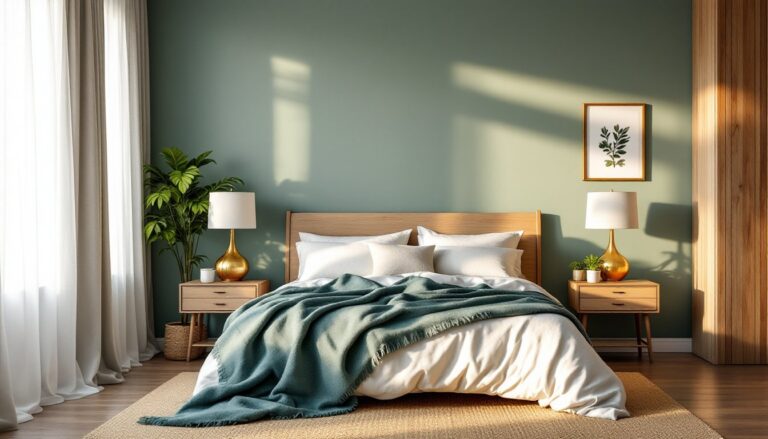
The colors surrounding you when you wake and sleep set the tone for everything else. Soft, muted tones activate the parasympathetic nervous system, the one responsible for rest and recovery. Think soft grays, warm whites, pale greens, and subtle blues rather than bold jewel tones or stark contrasts.
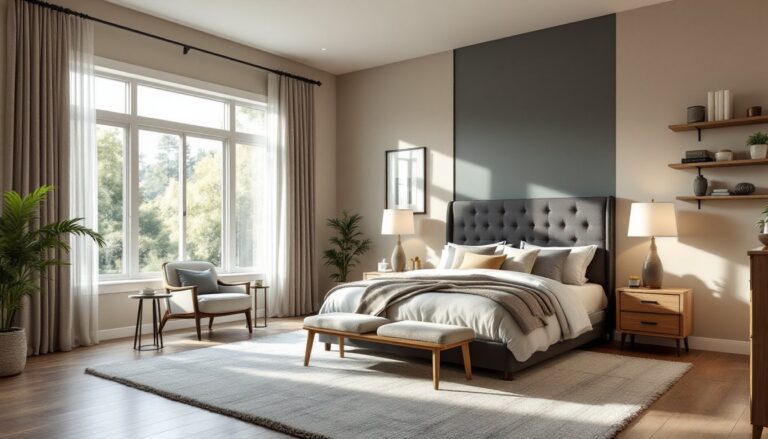
Neutral walls (Benjamin Moore’s Pale Oak or Sherwin Williams’ Alabaster, for example) serve as a calming base and won’t feel dated in five years. If you want subtle warmth, warm grays with undertones of beige or taupe work better than cool grays, which can feel clinical. Avoid pure whites, which reflect light harshly and can keep your nervous system slightly activated.
Accent walls are optional but unnecessary in a zen space. Instead, let soft colors dominate and introduce visual interest through texture and natural materials rather than contrasting hues. If you’re renting, removable wallpaper in muted tones gives you the color shift without permanent commitment. One gallon of quality interior paint covers approximately 400 square feet, so measure twice and buy accordingly.
Declutter and Minimize Your Space
A cluttered room is a cluttered mind. The zen bedroom philosophy centers on less. That doesn’t mean sparse or cold, it means every item earns its place.
Start by removing anything that doesn’t serve sleep or basic function: stacks of magazines, clothes piled on chairs, exercise equipment shoved in corners, work-related items. These visual stimuli keep your brain processing even as you try to rest. Your bedroom should feel like an edited space, not a storage unit. A practical rule: if you haven’t used it in a year and it doesn’t spark genuine joy or serve a daily function, it goes.
Storage matters here. Low-profile dressers, under-bed containers, and a bedroom closet system (not just a rod) keep essentials invisible. Floating shelves are tempting but often become catch-all spots. Instead, use closed storage, drawers, cabinets, or a reach-in closet with proper organization. Nightstands should hold only a lamp, perhaps a book, and maybe water. Not chargers, lotion bottles, and last month’s mail. This discipline compounds: less visual clutter means less stress, better sleep, and easier cleaning.
Incorporate Natural Materials and Textures
Zen spaces lean heavily on natural, tactile materials that ground you. Wood, stone, cotton, linen, wool, and wool felt all signal “nature” to your brain, which naturally calms your nervous system.
For flooring, solid wood (pine, oak, or walnut) or natural stone works beautifully, though bamboo is a sustainable, budget-friendly alternative. Area rugs in jute, sisal, or untreated natural fiber add warmth underfoot without visual chaos. A high-quality linen duvet cover (200-300 thread count, not 1000+) breathes better than cotton-poly blends and develops a soft, lived-in feel over time.
Wood bed frames, solid or with clean lines, anchor the room better than metal. Nightstands in solid wood or concrete feel grounded. Avoid particleboard or heavily stained pieces that off-gas formaldehyde, both disruptive to sleep and not truly zen. Woven wall hangings, wooden headboards, and stone accent tiles add texture without clutter. These materials also age gracefully, gaining character rather than looking worn.
Optimize Lighting For Relaxation
Lighting is the most underrated tool for sleep quality. Harsh overhead lights and bright screens suppress melatonin production, keeping you wired when you should be winding down. Zen bedrooms prioritize warm, dimmable light (2700K color temperature or lower) that mimics the fall of natural daylight.
Remove overhead fixtures entirely if you can, or install dimmer switches. Instead, layer your lighting: a soft bedside lamp with a 40-60 watt equivalent LED bulb, wall-mounted reading lights with individual controls, and ambient light from a corner uplighter. These let you adjust brightness without blasting the room.
Blacklust blackout curtains (100% light-blocking) are essential for sleep. Even small amounts of light, from streetlamps, alarm clocks, or phone screens, disrupt circadian rhythm. Heavy linen or thermal-backed curtains also improve insulation. Remove or cover anything that glows: digital clocks, router lights, or charger indicators. If you need a clock, use one without a visible display. Consider installing a smart lighting system that gradually dims at sunset and warms throughout the evening.
Add Plants and Natural Elements
Living plants aren’t just décor, they improve air quality, lower cortisol levels, and add life without visual chaos if chosen thoughtfully. Select low-maintenance species that don’t demand daily attention: pothos, snake plants, peace lilies, or monstera. These survive low light and irregular watering, removing stress rather than adding it.
Keep plants to 3-5 specimens maximum, positioned symmetrically: perhaps matching plants on nightstands or a larger floor plant in a corner. Pot them in natural ceramic or concrete (not bright plastic) that echoes your material palette. Resources like Decoist showcasing modern home decor offer inspiration for tasteful plant placement without overcrowding.
Beyond plants, incorporate natural elements: smooth stones, driftwood, or branches displayed in a simple vase. A water feature, a small tabletop fountain, introduces gentle sound that masks street noise and aids sleep. Many people find white noise machines helpful, but actual water or nature sounds (rain, ocean) engage the brain less actively than pink noise from a speaker.
Design A Functional, Clutter-Free Layout
How your furniture is arranged affects both flow and psychology. The zen approach prioritizes balance and openness. Position your bed where you see the door (the “command position” in interior design), ideally not directly in line with it. This gives you a slight psychological sense of control.
Keep nightstands to one per person, not two. A single floating shelf or wall-mounted surface behind the headboard replaces traditional nightstands and opens the room visually. Ensure the bed itself isn’t against a window, temperature fluctuations disrupt sleep. Leave floor space visible around all sides of the bed: a crowded layout feels claustrophobic even if physically spacious.
If your bedroom is large, resist the urge to fill it. A seating nook with two chairs and a small table for morning coffee works beautifully, but only if it serves actual purpose. Avoid a full desk: if you must work from bed, design a low console table that doesn’t visually compete with the bed itself. Dwell’s modern home design guidance emphasizes function-first layouts that feel intentional rather than decorated. Pathways between furniture should be clear, no stubbing toes on a dresser leg at night.
Conclusion
Building a true zen bedroom takes intention, not money. Start with one or two changes, paint, declutter, or swap to better lighting, rather than overhauling everything at once. Your nervous system will notice. Over weeks and months, as you layer in natural materials, plants, and thoughtful layout decisions, you’ll find yourself sleeping deeper and waking calmer. This is the real payoff: not a magazine-worthy room, but a space that actually serves you.