





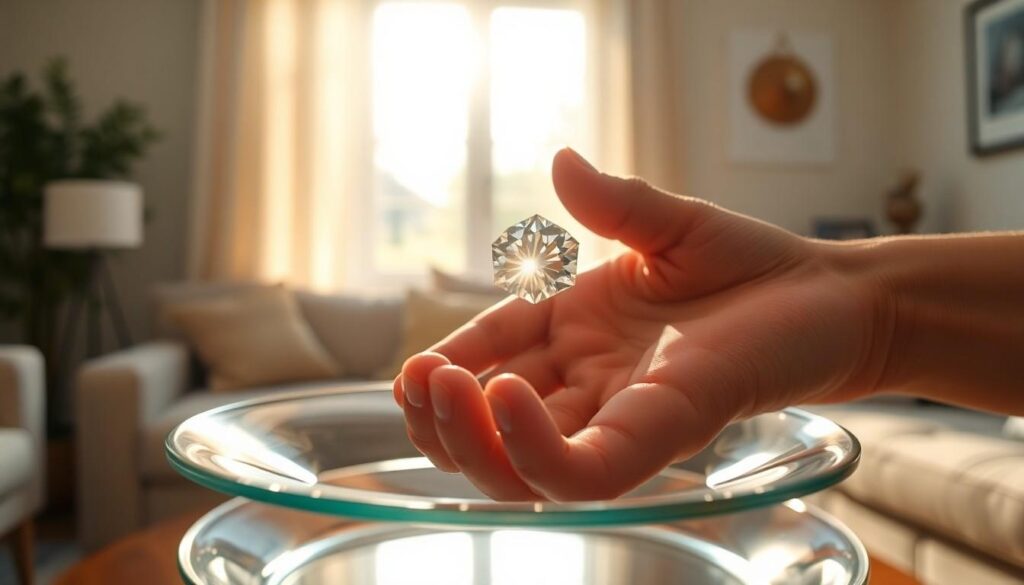
Ever wondered if that shiny rock sitting in your jewelry box is a diamond or just a clever impostor? Testing diamonds at home can be as thrilling as a detective movie, minus the dramatic music. With a few simple tricks up your sleeve, you can uncover the truth without needing to call in a professional.
Understanding Diamonds
Diamonds possess distinct characteristics that set them apart from other gemstones. They consist of carbon atoms arranged in a crystal structure, contributing to their remarkable hardness and brilliance.
What Makes Diamonds Unique
Diamonds rank as the hardest natural substance, scoring a 10 on the Mohs scale. Their unique refractive properties enable exceptional light dispersion, leading to a dazzling sparkle. Furthermore, diamonds exhibit high thermal conductivity, often feeling cold to the touch. The clarity, color, and carat weight provide additional factors for assessing their quality. These aspects contribute to a diamond’s allure and value.
Common Myths About Diamonds
Many people believe that all diamonds come in a clear color, but they actually exist in various hues, including blue, yellow, and pink. Another myth suggests that diamonds are indestructible, while in reality, they can chip or fracture under certain conditions. Additionally, some think that a diamond will always be valued for its size, neglecting the importance of cut and clarity. Understanding these myths helps consumers make informed decisions regarding their jewelry purchases.
Preparation for Testing
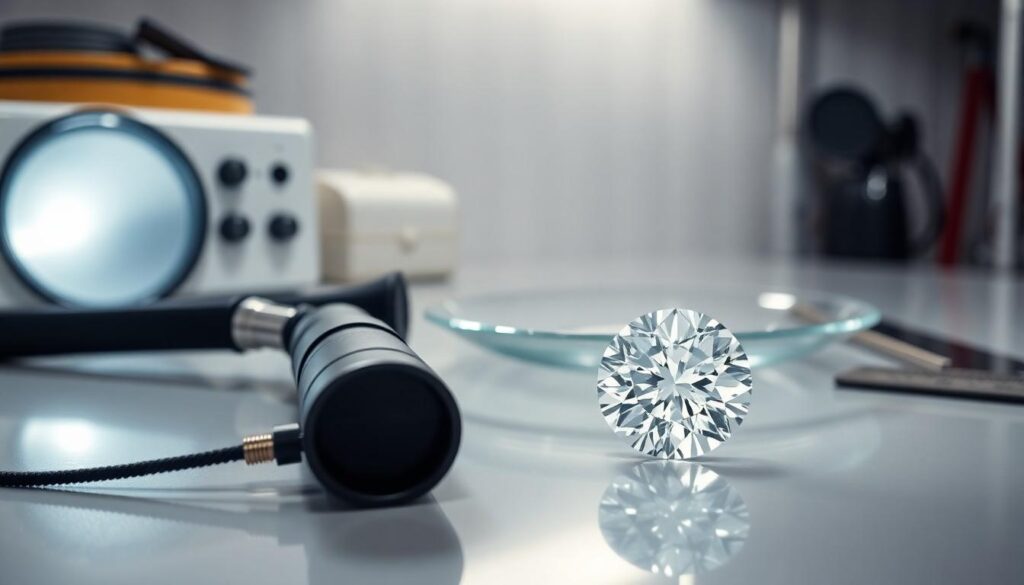
Preparation for testing diamonds at home involves gathering essential tools and ensuring safety measures are taken.
Tools Needed for Home Testing
Start with a simple magnifying glass. This tool allows for close inspection of the diamond’s clarity and cut. Include a flashlight to examine how well the stone reflects light. Additionally, common household items like a glass plate can be useful; glass can reveal authenticity through the scratch test. Finally, a ruler or measuring tape helps in assessing the carat weight and dimensions. Having these tools readily available enhances the accuracy of the testing process.
Safety Precautions
Ensure a well-lit area for testing diamonds to avoid accidents. Wearing protective eyewear helps prevent any potential injury from small debris. First, handle the diamond carefully to minimize the risk of dropping it. If using sharp tools or other testing methods, be cautious to avoid cuts or injuries. Cleaning the diamond with a soft cloth prevents scratches and maintains clarity during tests. Following these safety precautions allows for a smooth testing experience without unnecessary risks.
Methods to Test Diamonds at Home
Testing diamonds at home can be efficient and straightforward. Several methods allow individuals to determine a stone’s authenticity.
The Water Test
The water test offers a simple way to check a diamond’s characteristics. Dropping the stone into a glass of water reveals its density. Genuine diamonds sink quickly, while fake gemstones may float or hover. This method takes just a few seconds and requires only a clear glass of water. Observing how the diamond behaves in water provides a quick insight into its authenticity.
The Fog Test
The fog test is another effective method for testing diamonds. Breathing on the diamond creates condensation, similar to how fog forms on a mirror. Real diamonds disperse heat quickly, causing the fog to clear almost immediately. Conversely, fake stones tend to retain the fog for several seconds. Conducting this test helps individuals assess the diamond’s thermal conductivity.
The Scratch Test
The scratch test utilizes the diamond’s exceptional hardness. Utilizing a glass plate or a ceramic tile provides the surface for this test. A genuine diamond should easily scratch the glass or tile without any visible damage to its surface. This method confirms the diamond’s identity based on physical resilience. Ensuring sensitivity is crucial, so handle the diamond carefully during this evaluation.
Interpreting Test Results
Interpreting the results of diamond tests provides valuable insight into a stone’s authenticity. Each method yields specific signs to look for that determine whether a diamond is real or a fake.
What the Results Mean
A quick assessment reveals much about the diamond’s nature. When a diamond sinks in the Water Test, it indicates authenticity because genuine diamonds possess higher density. If it floats, the stone likely isn’t genuine. Successful passing of the Fog Test signals that the diamond has superior thermal conductivity. Fog dissipating quickly confirms authenticity. Additionally, if the diamond easily scratches a glass plate during the Scratch Test, this confirms its hardness. Remember, failing any of these tests may suggest a false diamond, prompting further evaluation.
Limitations of Home Testing
While home tests provide useful clues, they aren’t failproof. Environmental factors can affect results, leading to misleading conclusions. Diamonds that pass the Water Test might still be imitations made of dense materials. The Fog Test can create false positives with materials that mimic thermal conductivity. Furthermore, scratches on a diamond can hinder accuracy during the Scratch Test. It’s clear that home testing lacks the precision of professional assessments. Always consider these limitations when evaluating a diamond’s authenticity.
Alternative Testing Options
Exploring alternatives to home testing can provide additional assurance about a diamond’s authenticity. Professional appraisals and laboratory testing services represent two effective options for verification.
Professional Appraisals
Engaging a certified gemologist for a professional appraisal offers detailed insight into a diamond’s quality. Experts evaluate factors like clarity, color, and cut, providing a comprehensive report on authenticity. Typically, these appraisals involve identifying unique characteristics that distinguish a genuine diamond from imitations. Appraisals often come with certifications, adding credibility and value to the diamond. Individuals seeking clarity on multiple aspects may find this option particularly beneficial.
Laboratory Testing Services
Utilizing laboratory testing services offers the most precise evaluation of a diamond’s authenticity. Renowned gemological labs employ advanced equipment to analyze diamonds under controlled conditions. Tests conducted include assessments of light performance, internal inclusions, and chemical composition. Reports from these laboratories deliver in-depth information, ensuring thorough verification. Many buyers prefer laboratory-certification as it enhances the diamond’s resale value and bolsters confidence in their investment.
Testing diamonds at home can be an engaging way to determine the authenticity of a stone. By using simple methods like the Water Test, Fog Test, and Scratch Test, individuals can gain insights into their jewelry without professional help. These techniques highlight the unique properties of genuine diamonds, such as their density and thermal conductivity.
While home testing offers a convenient approach, it’s essential to remember that these methods aren’t foolproof. Environmental factors can influence results and imitations may occasionally pass some tests. For those seeking absolute certainty, professional appraisals and laboratory testing remain the gold standard. With the right knowledge and tools, anyone can embark on their journey to uncover the truth about their diamonds.