

Table of Contents
ToggleA large bedroom is both a blessing and a design puzzle. More square footage should feel relaxing, but an oversized, empty room can actually feel cold and cavernous. The trick isn’t filling every inch, it’s creating intentional zones, anchoring the space with a strong focal point, and using scale to your advantage. Whether you’re starting from scratch or refreshing an existing bedroom, these seven strategies will help you turn that generous space into a functional, inviting retreat that actually feels like home.
Key Takeaways
- Divide large bedrooms into intentional zones using rugs, furniture arrangement, and lighting to prevent the space from feeling cavernous and create distinct functional areas like reading nooks or work spaces.
- Create a visual anchor with a statement focal point such as an upholstered headboard, accent wall, or large windows to give the room depth and prevent it from feeling empty and vast.
- Choose scaled-up furniture pieces like king beds, wider nightstands (48″ or deeper), and substantial dressers (54″-60″ wide) to fill the horizontal and vertical space without making large bedroom ideas feel cramped.
- Layer three types of lighting—ambient, task, and accent—with dimmers and varied fixture heights to transform a large bedroom from feeling institutional into an intimate retreat.
- Combine neutral base colors with richer accent tones and mixed textures (linen, knits, wood, leather) to add visual warmth and depth without overwhelming the expansive space.
Define Zones for Multiple Functions
Large bedrooms often have room for more than just sleeping. Start by thinking about how you’ll actually use the space. Do you want a reading nook by the window? A small work desk for checking emails? A sitting area with a couple of comfortable chairs? Dividing the room into distinct zones prevents it from feeling like a hotel ballroom.
Use rugs, furniture arrangement, and lighting to create invisible boundaries between areas. A 5′ × 8′ area rug anchors the bed, while a smaller 3′ × 5′ rug can define a reading corner 10 feet away. Floating furniture (pulling pieces away from walls) naturally signals a separate zone without requiring walls or dividers. You don’t need a full second living room, even a pair of upholstered chairs and a side table creates a cozy second gathering spot that breaks up the expanse.
Create a Statement Focal Point
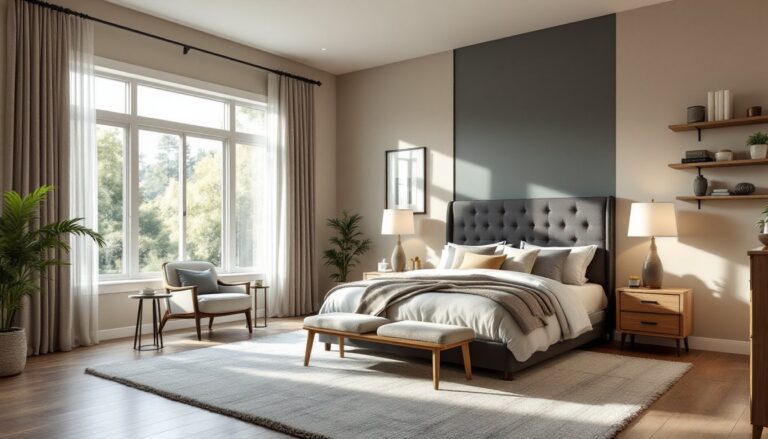
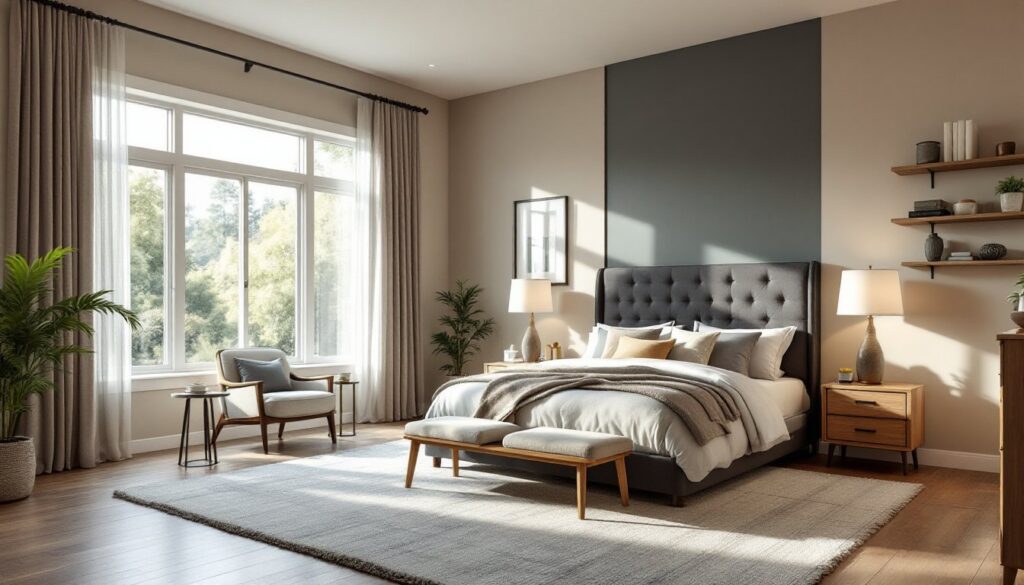
Every room needs an anchor. In a large bedroom, that’s usually the bed, but you can amplify it with intention. A tall upholstered headboard, accent wall paneling (shiplap or board-and-batten), or dramatic wallpaper draws the eye and gives the room visual weight. If the headboard feels too subtle, consider building a simple tufted or fabric-wrapped frame, it’s easier than you’d think and transforms the bed from furniture into a centerpiece.
Alternatively, if your bedroom has good natural light, a statement wall of large windows or glass doors works beautifully as a focal point. Some homeowners use a feature wall with bold color or texture (a deep jewel tone or textured wallpaper works well). The goal is to give your eye somewhere to land, which makes the space feel curated rather than vast and empty.
Scale Up Your Furniture Thoughtfully
This is where most people stumble. Filling a large bedroom with standard-size furniture makes the room feel smaller, not cozier. Instead, choose pieces with presence: a bed with a taller frame, a wider nightstand (48″ instead of 24″), a substantial dresser, or an accent chair with arms that feel substantial in scale.
A king bed (76″ wide × 80″ long) is the standard for large rooms, but you might also pair it with two nightstands that are deeper than usual (24″ to 28″ deep). Dressers should be wider, aim for at least 54″ to 60″ rather than a thin 36″ unit. An oversized ottoman or bench at the foot of the bed, area rugs sized appropriately to the room, and wall art hung higher and larger also help fill the vertical and horizontal space. Think in terms of furniture with volume, not just pieces that fit: this prevents the room from swallowing the comfort factor.
Layer Lighting for Ambiance and Functionality
A single overhead light leaves a large bedroom feeling flat and institutional. Layer three types of lighting: ambient (overall illumination), task (bedside reading, desk work), and accent (highlighting architectural features or art). Ambient lighting can be ceiling-mounted recessed fixtures, a central chandelier, or a flush-mount fixture with a dimmer, dimming is critical for creating mood without installing multiple fixtures.
Add bedside table lamps (go oversized, tall lamps help balance a large headboard) and wall sconces flanking the bed if you prefer them to nightstands. If you have a reading nook, a floor lamp or focused task light makes it functional. Don’t forget accent lighting: uplighting behind artwork, LED strips behind floating shelves, or small accent lights in built-in niches add depth and prevent the space from feeling one-dimensionally lit. The payoff for layered lighting is huge in a large room, it transforms a cavernous space into an intimate retreat.
Use Color and Texture to Fill the Space
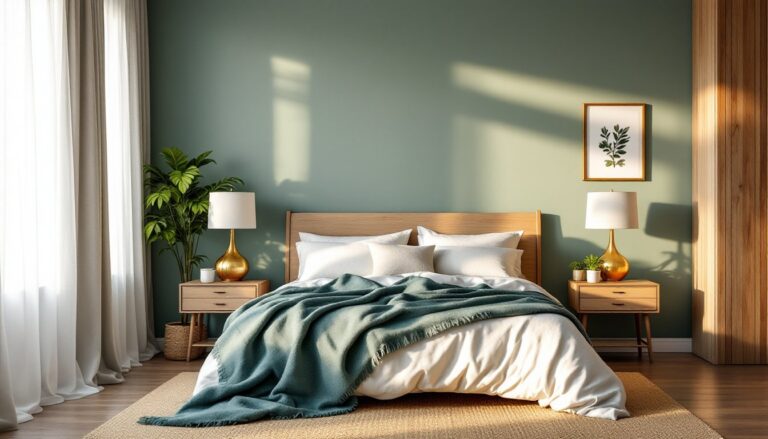
A monochrome bedroom in a large space can feel cold: thoughtful color and texture warm it up. You don’t need bold jewel tones everywhere, instead, choose a neutral base (warm whites, soft grays, or greige) and layer in richer accent colors through textiles and art. A deep charcoal accent wall, jewel-tone throw pillows, a richly patterned area rug, or textured curtains add visual interest without overwhelming the space.
Texture matters as much as color. Mix smooth linen, chunky knit throws, natural wood finishes, leather accents, and woven elements. These variations create depth, which prevents the room from feeling flat. Resources like MyDomaine and Home Bunch showcase how layered textures work in practice. A bed piled with pillows in different fabrics, a jute rug under a patterned runner, and linen curtains with a woven shade all work together to fill the volume visually and tactilely.
Incorporate Storage Solutions
Large bedrooms often become storage dumping grounds because the space feels infinite. Get ahead of clutter by building in intentional storage. Built-in closet systems with shelving and drawers, under-bed storage boxes, wall-mounted shelving, or a small dresser with plenty of drawers all prevent visual chaos. If your budget allows, a walk-in closet with organized shelving keeps clothes visible and accessible without spreading across the room.
Open storage, like floating shelves or a low bookcase, works well in large rooms because it doesn’t create visual weight the way floor-to-ceiling cabinets might. Pair closed storage (a dresser, nightstand with drawers) with open display (shelves, ladder racks for blankets) to balance functionality with visual openness. Comprehensive bedroom design resources like the 55 large bedroom ideas guide highlight how integrated storage prevents the sprawl that derails spacious bedrooms.
Conclusion
A large bedroom thrives on intention. Zone it thoughtfully, anchor it with a focal point, scale your furniture appropriately, layer your lighting, build in color and texture, and don’t neglect storage. These strategies transform spacious emptiness into a balanced, livable retreat that you’ll actually want to spend time in. Start with one or two changes, a new headboard, layered lighting, or a statement wall, and you’ll feel the difference immediately.