



Table of Contents
ToggleNavy blue has become the go-to choice for homeowners seeking a bedroom that feels both sophisticated and restful. Unlike trendy pastels or bold jewel tones that can feel dated within a season, navy blue bedroom ideas deliver timeless elegance with proven staying power. Whether you’re planning a master bedroom overhaul or refreshing a guest room, navy offers versatility, it pairs seamlessly with minimalist, contemporary, and classic décor styles. This guide walks you through eight practical strategies to nail your navy blue bedroom transformation, from paint selection and wall treatments to furniture placement and lighting solutions. You’ll find actionable steps rooted in design principles and real-world execution that work whether you’re tackling the project yourself or collaborating with professionals.
Key Takeaways
- Navy blue bedroom ideas create a timeless, sophisticated backdrop that promotes deeper sleep through cooler tones that support melatonin production.
- Choose an eggshell or satin paint finish for navy walls to reflect light subtly and resist moisture, and always test samples at different times of day before committing.
- Layer three types of lighting—ambient (dimmable), task (bedside lamps at 40–60 watts), and accent (wall sconces or LED strips)—to prevent dark walls from creating unwanted shadows.
- Balance navy walls with light-colored textiles, white or cream bedding, and light-toned rugs to prevent the space from feeling heavy or cave-like.
- Pair navy walls with light wood furniture or white lacquered pieces, and avoid over-furnishing to keep the room feeling open and prevent clutter from dominating the visual space.
- Position the bed against the navy accent wall as your focal point, and use wall-mounted shelving and low-profile dressers to maintain sightlines and visual flow throughout the room.
Why Navy Blue Works as a Master Bedroom Color
Navy blue functions as a grounding anchor in bedroom design, psychologically signaling calm and stability without the coldness of pure gray or the melancholy of black. Neurological research on color and sleep shows that cooler tones support melatonin production and promote deeper rest cycles, critical for master bedrooms where you’re investing time and money for better sleep quality.
Navy works across natural light conditions. In south-facing rooms with abundant sunlight, it absorbs excess brightness and reduces glare. In north-facing bedrooms with limited light, strategic layering with warm-toned textiles and lighting prevents the space from feeling cave-like.
From a design perspective, navy acts as a neutral backdrop that lets accent colors, whites, warm golds, soft greens, or blush tones, take the spotlight without competing. This flexibility means your bedroom won’t clash if you want to swap bedding, artwork, or accessories down the road. It’s the opposite of trend-chasing: navy supports longevity in your investment.
Wall Treatments and Paint Finishes
Accent Walls vs. Full Room Coverage
Deciding whether to paint all four walls or commit to a single accent wall depends on your room’s size, natural light, and emotional response. Small bedrooms (under 120 square feet) benefit from full navy coverage paired with lighter trim and ceiling colors: the uniform color expands the space psychologically. Larger master bedrooms can handle full navy walls without feeling cramped, especially when paired with adequate task and ambient lighting.
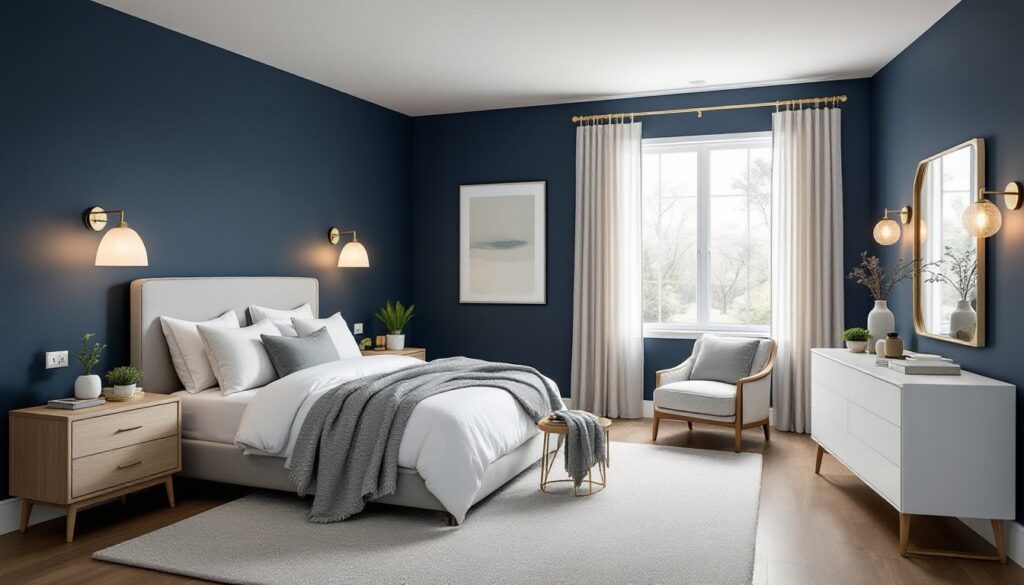
Accent walls work best on the wall opposite your bed, the first thing you see when entering. This draws focus without overwhelming the room. Paint the remaining three walls a soft white, warm gray, or pale blue to keep balance.
For paint finish, eggshell or satin (not flat or matte) reflects light subtly and resists moisture better in bedrooms where humidity fluctuates seasonally. Navy in flat finish can read dull: eggshell brings depth and sophistication. Avoid high-gloss, which belongs in bathrooms and kitchens.
Before purchasing paint, test samples on at least three walls and observe them at different times, early morning, midday, and evening. Navy undertones vary: some lean warm (almost purple), while others skew cool (blue-black). Brands like Sherwin-Williams Naval, Benjamin Moore Hale Navy, or Behr Blueprint are starting points, but samples cost under $5 and prevent a $300 mistake.
Furniture and Layout Combinations
Furniture selection in a navy bedroom hinges on contrast and proportion. Light woods (oak, ash, maple) or white lacquered pieces brighten the space and prevent a heavy feel. Dark walnut or espresso furniture reads rich against navy but requires compensating brightness elsewhere, additional table lamps, lighter textiles, or reflective surfaces like mirrors.
Layout strategy matters more than you’d think. Position the bed as the focal point, ideally against the navy accent wall or centered on a longer wall. Nightstands flanking the bed ground the furniture arrangement and improve functional lighting accessibility. A low-profile dresser (under 36 inches tall) maintains sightlines and prevents the room from feeling compartmentalized.
Incorporate interior design inspiration from Home Bunch for layering ideas, they showcase how successful navy bedrooms balance depth with openness through smart furniture pairing and arrangement. A bedroom bench at the foot of the bed adds functionality and visual interest without cramping the space if you keep it under 18 inches deep.
Avoid over-furnishing. Navy walls amplify clutter visually, so stick to essential pieces: bed, nightstands, dresser, and one accent chair if the layout allows. Wall-mounted shelving above the dresser saves floor space and maintains visual flow.
Lighting Solutions for Navy Blue Bedrooms
Lighting is non-negotiable in navy bedrooms because dark walls absorb light, creating shadows if you rely solely on overhead fixtures. Layer three light types: ambient (overhead or ceiling), task (bedside lamps), and accent (wall sconces or strip lighting).
Ambient lighting should be dimmable. Install a dimmer switch on your ceiling fixture so you can adjust intensity from full brightness for cleaning and getting ready to 30% for winding down before sleep. LED bulbs are cheaper to run and emit minimal heat compared to incandescent.
Task lighting, bedside lamps with 40–60 watt equivalent bulbs, is essential for reading without straining your eyes or light spilling across a partner’s pillow. Swing-arm wall sconces are space-savers if your nightstands are cramped. Position them 24–30 inches above mattress height.
Accent lighting adds depth and visual interest. Recessed lighting along a wall ledge or hidden LED strips behind a headboard create ambient glow without adding furniture. Warm white bulbs (2700K color temperature) pair best with navy: cooler whites (4000K+) can feel clinical.
Wall sconces flanking a mirror above a vanity or dresser serve double duty, they’re decorative and functional for morning routines. Aim for fixtures with frosted glass or fabric shades to diffuse harsh light.
Textiles, Bedding, and Soft Furnishings
Textiles carry the weight of transformation in a navy bedroom because they introduce texture, warmth, and comfort that paint alone cannot deliver. Start with bedding: a crisp white or cream duvet or comforter prevents the bed from disappearing into the walls. Layer with throw pillows in mixed fabrics, linen, velvet, and cotton, in whites, soft grays, or muted accent colors like sage green or warm taupe.
Rugs ground the space and soften sound absorption. A light-colored rug (cream, pale gray, or soft white) under the bed expands the visual footprint and prevents your navy walls from dominating. Size it so at least 24 inches extends on either side of the bed: too-small rugs cheapen the look.
Window treatments deserve attention. Heavy linen or blackout curtains in white, cream, or a complementary neutral frame the window and manage light control. Navy curtains matching the walls work if you add a light valance or use sheer underpanels to prevent a cave-like window frame.
Throw blankets draped over an accent chair or the foot of the bed add coziness and visual texture. Aim for materials with sheen, linen, lightly napped cotton, or wool, rather than flat knits. Modern home decor ideas at Decoist showcase how texture layering elevates navy bedrooms from flat to sophisticated.
Wall art and décor should breathe. A large framed print or gallery wall in whites, metals, and light wood frames prevents the navy walls from feeling oppressive. Minimalist or abstract art works better than busy patterns that compete with the wall color.
Conclusion
Navy blue bedroom ideas aren’t just trend-driven, they’re rooted in proven design principles and the psychology of restful spaces. By selecting the right paint finish, layering contrasting furniture, mastering your lighting strategy, and anchoring textiles thoughtfully, you’ll create a bedroom that feels both personal and timeless. Start with your accent wall or full navy coverage, add warm lighting and light-toned bedding, and let the sophistication build. Your navy bedroom will reward the effort with years of calm, confident style.